- Personalized Nutrition
Turmeric and Curcumin: Where Ancient Spice Meets Modern Self-Care
- By Patrizia Winsper
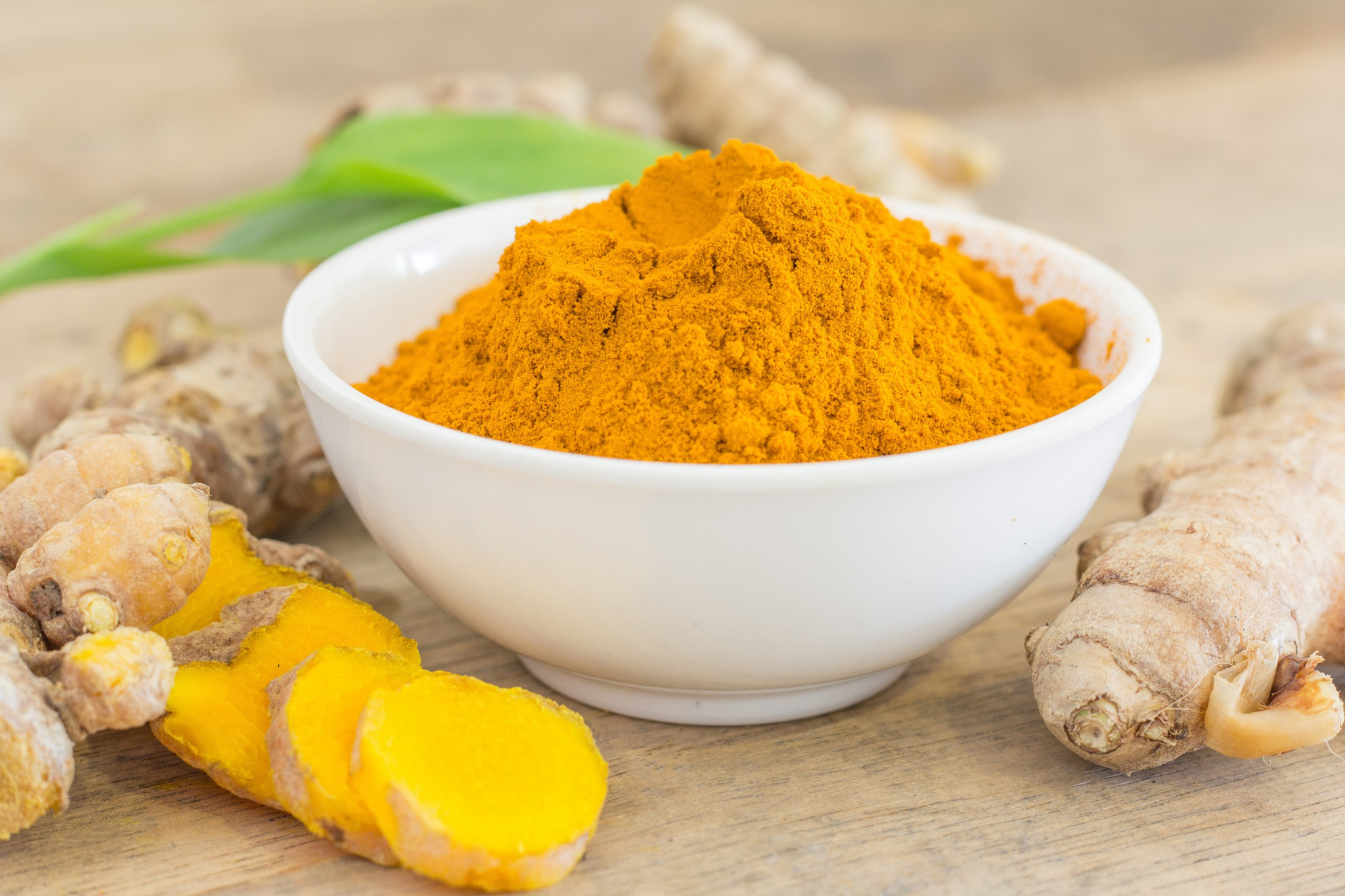
Turmeric is probably best known as the golden-yellow spice that adds color, flavor and warmth to foods ranging from curries and rice dishes to soups and sauces. But there is more to this familiar kitchen staple than its vivid color which is likely to stain any fabric it encounters!
Understanding the distinction between turmeric and curcumin is useful because the words are often erroneously used interchangeably in conversations surrounding nutrition, scientific research and dietary supplements. In essence, turmeric is a plant-derived ingredient while curcumin is one of its chemical compounds.
What Exactly Is Turmeric?
Turmeric is a complex, botanical ingredient that comes from the rhizome, or underground stem of Curcuma longa, a plant in the ginger family. The rhizome is dried and typically ground into the familiar yellow-orange powder used as a culinary spice.
There is a long history of turmeric use in Asian cuisines. It has also been part of traditional practices in several cultures, including Ayurvedic, traditional Indian medicine, dating back more than 4,000 years and traditional Chinese medicine for over 1,300 years. Historically, turmeric has been used as a coloring agent, in preparations for ceremonies and rituals, as well as for medicinal, and therapeutic purposes, long before modern pharmaceuticals existed.
Today, science approaches turmeric from a more targeted approach. Rather than treating the plant as a single substance, researchers can isolate selected compounds, study their individual chemical properties and examine how these compounds interact with biological activity.
Curcumin, Nature’s Golden Wellness Secret
The Curcuma longa rhizome contains a diverse collection of compounds, including a group called curcuminoids; curcumin is but one of these. It’s clear that while turmeric and curcumin are intricately connected, they are not the same thing; turmeric contains curcuminoids, which include curcumin. Let’s investigate how curcumin has helped turmeric navigate the interesting journey from the spice cabinet to the research laboratory.
Curcuminoids are a group of related polyphenolic compounds naturally found in turmeric. The three principal curcuminoids commonly discussed in scientific literature are curcumin, demethoxycurcumin and bisdemethoxycurcumin. Curcumin, the most abundant and best-known of the three, contributes substantially to turmeric’s characteristic, bright yellow-orange color.
This small molecule has attracted particular attention because of its chemical properties and its interactions with cellular pathways that support normal bodily functions. Research has examined curcumin in connection with antioxidant activity, joint comfort, immune and inflammatory balance, and other biological processes. Having been studied so extensively, curcumin is often the first compound that comes to mind when people hear the word “turmeric.”
However, turmeric contains more than curcuminoids. Researchers have identified numerous other compounds, including volatile terpenes and sesquiterpenes such as ar-turmerone, alpha-turmerone, beta-turmerone, zingiberene and germacrone. These beneficial compounds also contribute to turmeric’s unique chemical profile. They make up the aromatic core of turmeric essential oil, lending it warm, woody and earthy notes.
Culinary Turmeric versus Concentrated Extracts: Why the Distinction?
Understanding the difference between culinary turmeric and concentrated extracts is important when comparing dietary supplements. Turmeric powder, made from the plant’s root, contains a range of naturally occurring compounds, including curcuminoids and volatile oils. Curcumin represents only a portion of the curcuminoids in turmeric. Concentrated extracts, by comparison, are processed to provide higher levels of particular constituents, depending on how the extract is prepared and standardized.
This distinction matters because a jar of turmeric powder used in cooking and a supplement containing a concentrated turmeric extract are not interchangeable. They can differ considerably in composition and curcuminoid content. The word “turmeric” on a product label does not, by itself, reveal how much curcumin or total curcuminoids the product contains. Likewise, a product listing curcumin as an ingredient does not necessarily reflect the broader range of compounds found in whole turmeric.
Reading the label carefully can provide a clearer picture. Look for whether the product contains turmeric powder, turmeric extract or isolated curcumin, the amount provided per serving, and, where specified, the amount of curcumin or total curcuminoids. Some formulations also list ingredients that support absorption. Additional ingredients can affect a product’s overall formulation, so it’s worth checking the complete list rather than relying solely on the information printed on the front of the bottle.
The same principle applies when evaluating scientific research. A study examining a concentrated curcumin preparation does not automatically establish the same effects for turmeric used in everyday cooking. Conversely, findings from research on whole turmeric should not automatically be attributed to isolated curcumin. The preparation, composition, amount used and study conditions all matter. Understanding which form of turmeric a product contains makes it easier to interpret research and compare supplements more thoughtfully.
A useful context is fundamental when reading scientific studies as well. A study involving a concentrated curcumin preparation should not be used to draw conclusions about the effects of ordinary, culinary turmeric. Likewise, findings involving whole turmeric should not automatically be attributed to isolated curcumin because whole turmeric contains a wider spectrum of natural compounds that may offer the advantage of whole-plant synergy.
The Bioavailability Question
Bioavailability refers to the amount of a substance that becomes available to the body after it is consumed. Surprisingly, curcumin has relatively low oral bioavailability because it is poorly absorbed, rapidly metabolized, and easily eliminated. Researchers have therefore explored a variety of enhancers to improve how much curcumin becomes available after consumption.
One of the best-known approaches involves the black pepper extract, piperine, which can boost absorption by up to 2,000% by temporarily blocking the liver enzymes that destroy it. A small human study published in Planta Medica, a leading international, peer-reviewed scientific journal focused on medicinal plant and natural product research, found that adding piperine substantially increased measured curcumin bioavailability compared with curcumin alone. The study used specific, relatively high doses, so its results should not be interpreted as meaning that simply adding a little black pepper to every meal will produce the same effect.
Still, the finding helped establish why piperine is sometimes included in curcumin supplements. The National Center for Complementary and Integrative Health (NCCIH) also recognizes the combination of curcumin and piperine as one way to improve curcumin’s bioavailability.
And piperine is not the only approach. Researchers have investigated different formulations and delivery systems designed to improve curcumin’s absorption and availability in the body. Liposomal or phytosome formulas wrap curcumin in fats to help it pass through the gut wall more easily.
Turmeric and Dietary Supplements
Today, turmeric is found in a wide range of dietary supplements. Dr. Matteo Bertelli’s Vitality Formula contains a dry turmeric extract providing defined amounts of curcuminoids, including curcumin.* According to the product’s formulation information, one daily capsule has 100 mg of dry turmeric extract, which provides 95 mg of curcuminoids, and 70 mg of curcumin.
Dr. Matteo Bertelli’s Vitality Formula exemplifies why the turmeric-versus-curcumin distinction is more than just a technical detail. A label may identify the botanical source as turmeric while separately specifying how much of its concentrated constituents are provided. The same principle applies broadly to all botanical supplements: understanding both the plant ingredient and the specific extracts used can make a supplement label much easier to interpret.
A Little Knowledge Goes a Long Way
Long before curcumin became the subject of laboratory research, turmeric had a well-established place in cuisine and traditional practices. Its history is part of what makes it familiar, while its complex chemistry keeps researchers investigating the properties of its various compounds.
A familiar ingredient name tells only part of the tale. When it comes to dietary supplements, reading beyond the marketing claims and looking past the front of the bottle to examine formulation details provides a clearer picture of what a supplement contains. Wellness decisions don’t have to be complicated, but they do benefit from curiosity and taking a closer look. In this way, consumers are empowered to make more informed choices, and better sense of scientific headlines.
Sometimes, the most useful wellness insight isn’t discovering a new ingredient, it’s understanding one that’s been in your spice cabinet all along!
References
Anand, Preetha, et al. “Bioavailability of Curcumin: Problems and Promises.” Molecular Pharmaceutics, vol. 4, no. 6, 2007, pp. 807-818. DOI: 10.1021/mp700113r.

Hewlings, Susan J., and Douglas S. Kalman. “Curcumin: A Review of Its Effects on Human Health.” Foods, vol. 6, no. 10, 2017, article 92. DOI: 10.3390/foods6100092.

National Center for Complementary and Integrative Health. “Turmeric.” U.S. Department of Health and Human Services. Accessed Oct. 4, 2026.

Shoba, G., et al. “Influence of Piperine on the Pharmacokinetics of Curcumin in Animals and Human Volunteers.” Planta Medica, vol. 64, no. 4, 1998, pp. 353-356. DOI: 10.1055/s-2006-957450.

Wang, Zexuan, et al. “Turmeric: A Comprehensive Review of Its Botany, Traditional Uses, Phytochemistry, and Mechanisms as a Functional Food.” Nutrients, vol. 18, no. 8, 2026, article 1197.
Disclaimer
*These statements have not been evaluated by the Food and Drug Administration. This product is not intended to diagnose, treat, cure, or prevent any disease.
This article provides general educational and wellness information only. It is not medical advice and is not intended to diagnose, treat, cure, mitigate, monitor, screen for, predict, assess the risk of, or prevent any disease, disorder, syndrome, deficiency, symptom, or medical condition. Always consult a qualified healthcare professional before making health-related decisions, changing diet, lifestyle, supplement use, medication, or medical care.
Before making significant changes to your diet, supplement routine or lifestyle — particularly if you have a medical condition, take medication, are pregnant or are breastfeeding — consult a qualified healthcare professional.
Recent Posts
- Turmeric and Curcumin: Where Ancient Spice Meets Modern Self-Care
- Citrus Bioflavonoids: What They Are and What They Do
- Hidden Hunger: What Nutrient Deficiencies Really Look Like Today
- Pushing the Limits: How Intense Exercise Affects the Immune System and Recovery
- More Than a Bottled Promise: How Dietary Supplements Fit into Real-Life Wellness